





 Like Us on Facebook to enjoy 5% discount
Beginner Lock Pick Sets Guide: Best Ways to Build Your Skills from Day One
2026-03-25 15:28
Starting your journey into locksport is both exciting and technical. The most critical decision you will make as a beginner is selecting your first set of tools. A high-quality, well-configured set does more than just open locks; it builds proper muscle memory, teaches you feedback fundamentals, and prevents the frustration of dealing with poor-quality materials that can bend or break. Whether you are practicing on a cutaway lock or progressing to standard padlocks, the foundation of your skill development relies entirely on having the right equipment from day one. For those ready to start, the best approach is to Buy Beginner Lock Pick Sets that focus on essential tools rather than large, overwhelming kits filled with unnecessary rakes.
Core Strengths & Weaknesses of Beginner Kits
Pros of a Well-Chosen Set:
1.Clear feedback: Tools made from 301 high-yield stainless steel transmit vibrations clearly, helping you identify binding pins.
2.Durability: Quality steel resists bending under tension, ensuring tools last through thousands of practice sessions.
3.Essential focus: A curated 5-10 piece set prevents decision fatigue, allowing you to master tension and single-pin picking (SPP) first.
Cons of Poor-Quality or Overly Large Sets:
1.Muddy feedback: Cheap, soft metals (often low-carbon steel) dull the tactile feedback critical for learning.
2.Risk of breakage: Inferior picks can snap inside locks, potentially ruining the lock or requiring disassembly.
3.Unnecessary complexity: 20+ piece sets often include obscure profiles that distract from building core skills.
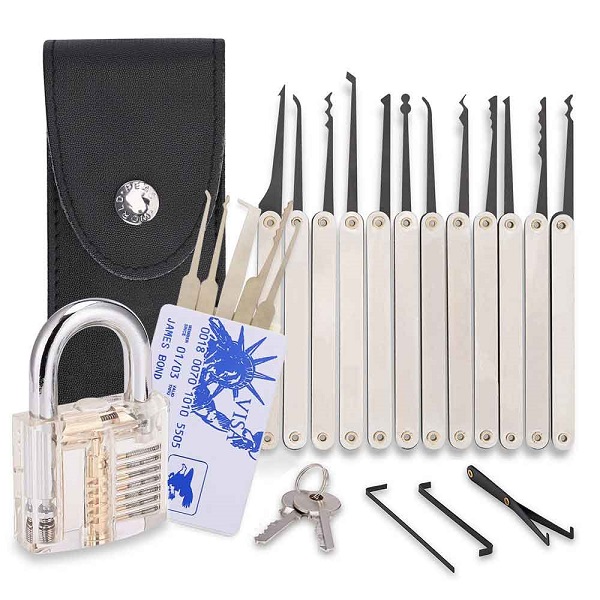
How to Choose Your First Lock Pick Set?
To build skills effectively from day one, focus on three core tool types: hooks for single-pin picking, rakes for quick manipulation, and tension wrenches for applying rotational force. A well-structured starter kit should prioritize material quality over quantity. Most locksport instructors agree that a short hook, a medium hook, a Bogota rake, and a set of bottom-of-keyway (BOK) tensioners are sufficient for the first 90% of standard pin-tumbler locks you will encounter.
Key Factors to Evaluate:
1.Material: Look for 301 high-yield stainless steel or heat-treated 420 stainless. These provide the best feedback and durability.
2.Finish: Picks should have polished edges. Rough, stamped edges create friction inside the lock, masking feedback.
3.Tension Tools: A set should include at least 3-4 different thicknesses of tension wrenches. Tension control is 70% of successful picking.
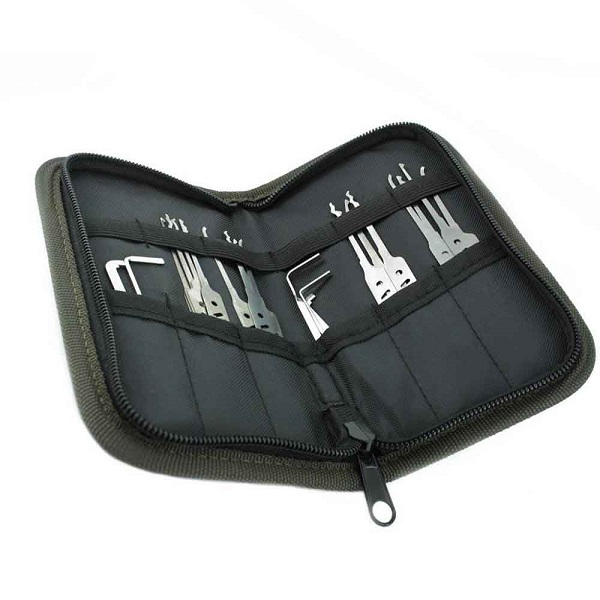
4.Carrying Case: A roll-up or molded case protects tools and keeps them organized for practice sessions.
Beginner Lock Pick Set Comparison
Beginner Lock Pick Set Comparison
| Set Type | Material | Tool Count | Best For |
| Economy / Budget | 420 Stainless / Low Carbon | 5-10 pieces | Learning tension control; low-cost entry |
| Standard / Hobbyist | 301 High-Yield Stainless | 12-18 pieces | Consistent feedback; long-term durability |
| Professional / Compact | 301 HY / Heat-Treated 420 | 8-12 pieces | Portability; advanced skill building |
Building Skills with Structured Practice
Once you have secured your tools, structured practice is essential. Begin with a clear acrylic practice lock. While these do not perfectly replicate the feel of a metal lock, they are invaluable for visualizing pin states and understanding the binding order. After you are comfortable with the visual aspect, move to a cutaway lock. This allows you to verify your tactile assumptions without relying on sight.
A Common Mistake: Using too much tension. Light, consistent tension is the secret to feeling the subtle clicks of pins setting. A practical drill involves using a standard padlock and practicing only the binding order.
1.Insert your tension wrench and apply feather-light pressure. A good reference is to use the same pressure you would use to hold a piece of paper against a wall.
2.Use your hook to gently push each pin. Identify the binding pin, which will feel stiff compared to the others.
3.Set that pin until you feel a slight click and see the core move slightly.
4.Move to the next binding pin. Repeat until the lock opens.
This methodical approach builds the muscle memory required for higher-security locks later on.
Avoiding Common Pitfalls
The market is flooded with "cheap" sets that often feature soft metals or poorly finished edges. While it is tempting to look for Cheap Beginner Lock Pick Sets, it is crucial to distinguish between affordable and low quality. A cheap set made of inferior steel will bend under tension, provide muddy feedback, and often break inside locks, ruining both the tool and the practice lock. Conversely, an affordable set made from high-yield stainless steel offers the durability needed for thousands of practice sessions.
Another pitfall is moving to difficult locks too quickly. Beginners often attempt high-security locks or those with spool and serrated pins before mastering standard pins. This leads to frustration because the feedback required for security pins is subtle. Stick to standard pin-tumbler locks until you can consistently open them in under 60 seconds without looking at the keyway. By starting with the right tools, whether a compact professional set or a standard hobbyist kit, and focusing on the fundamentals of tension and feedback, you will build a solid foundation that makes advanced techniques significantly easier to master.