





 Like Us on Facebook to enjoy 5% discount
Lock Pick Guns Guide: How Pick Guns Compare to Traditional Lockpicking
2025-12-11 09:07
For those curious about lock opening methods, the choice between a modern lock pick gun and traditional tools is a key decision. While some may immediately look to Buy Lock Pick Gun tools online, understanding how they differ from the classic craft of manual picking is essential. This guide clearly compares both approaches.
What are the Core Differences in Technique and Mechanism?
Traditional lockpicking is a tactile art form. It relies on two simple tools: a tension wrench and a pick. The locksmith applies careful rotational pressure with the wrench while using the pick to manually lift each pin inside the lock cylinder to its correct shear line. Success depends entirely on the practitioner's ability to interpret subtle vibrations and clicks through their tools, a skill that requires significant practice and a deep feel for the lock's internal mechanics.
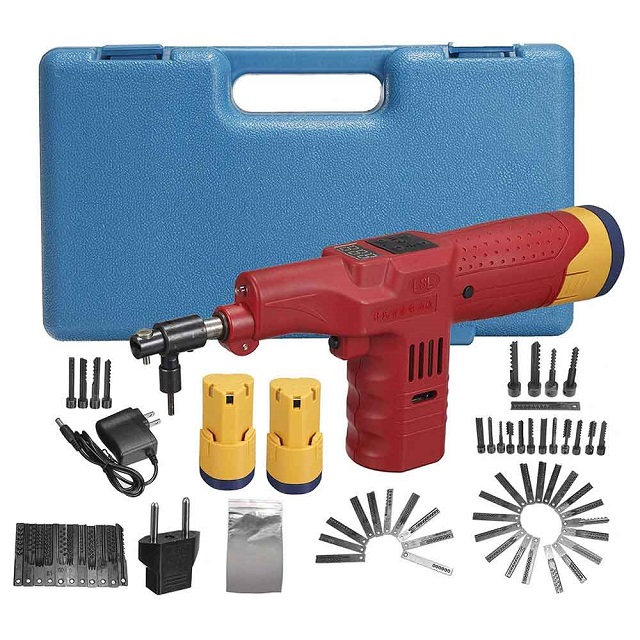
In stark contrast, a lock pick gun, whether manual or electric, operates on a principle of kinetic energy. Instead of delicately setting pins one by one, the user places a thin needle-like pick into the keyway and activates the gun. This action creates a rapid striking or vibrating motion that jolts all the pins upward simultaneously. When combined with light tension from a wrench, this can cause the driver pins to separate from the key pins at the shear line for a split second, allowing the cylinder to turn. The technique is less about finesse and more about applying a quick, mechanical force.
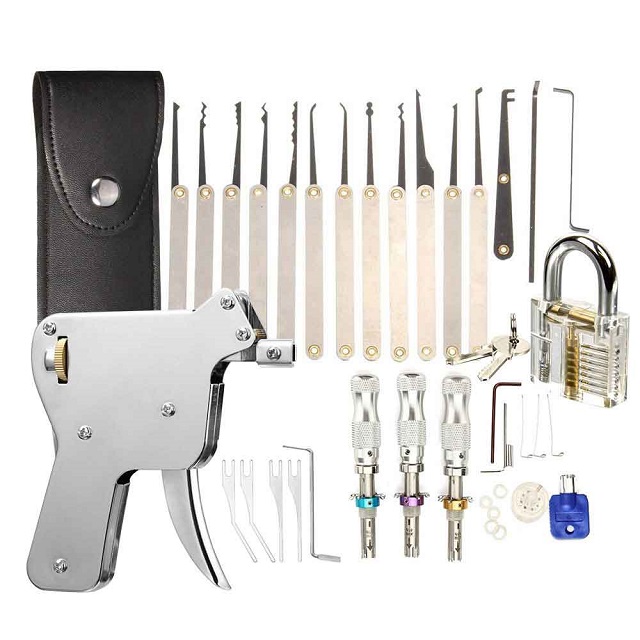
What are the Key Advantages and Disadvantages of Each Method?
1.Speed and Learning Curve
The primary advantage of a pick gun is its relatively fast learning curve. A beginner can often achieve their first open on a simple lock much quicker with a gun than with traditional picks. The open itself can also be faster once the tool is mastered. Traditional picking, however, has a steep initial learning phase that demands patience and dedicated practice to develop the necessary sensitivity. Speed with traditional tools comes much later, but is ultimately more consistent across different locks.
2.Versatility, Precision, and Feedback
This is where traditional picking excels. A skilled practitioner can navigate security pins, manipulate locks with uncommon keyways, and diagnose specific problems within a lock's mechanism through direct feedback. Pick guns are often less effective on high-security locks with advanced pinning and can be loud and obvious. They offer very little diagnostic feedback, functioning more as a blunt instrument that either works or doesn't.
3.Skill Development and Tool Philosophy
Learning with traditional tools builds a fundamental understanding of lock mechanics that is transferable to almost any pin-tumbler lock. It cultivates patience and problem-solving skill. Relying solely on a pick gun can create a dependency on the tool itself without fostering this deeper knowledge. Traditional picks are also far more portable, discreet, and inexpensive than most quality pick guns.
Which Method Should You Choose for Different Situations?
For a complete novice whose primary goal is to open common residential locks quickly without a deep dive into the hobby, a pick gun can be a satisfying starting point. It is also a tool sometimes used by locksmiths in certain urgent, non-destructive entry scenarios where speed is critical. However, it is important to manage expectations, as its effectiveness diminishes on newer or more complex locks.
If your goal is to genuinely learn the craft of locksport, understand security mechanisms, or tackle a wide variety of locks including high-security models, traditional picking is the only path. The foundational skills, versatility, and quiet precision it provides are unparalleled. For ethical hobbyists and security professionals, the deep knowledge gained from manual picking is far more valuable than a single tool's shortcut.
The choice between a pick gun and traditional picks is not about finding a universal winner. It is about selecting the right tool for your specific objective. Traditional picking is the comprehensive, skill-building discipline, while a pick gun serves as a specialized tool for particular situations. Regardless of your choice, always prioritize legal and responsible use. Remember that investing in proper education and quality tools, rather than simply looking for a Cheap Lock Pick Gun, will lead to better results and a more thorough understanding of security principles. True proficiency comes from knowledge, not just a tool.