





 Like Us on Facebook to enjoy 5% discount
Pocket Lock Pick Sets Guide: How to Use BluE Stainless Steel 7‑in‑1 Folding Lock Pick Set Effectively
2025-12-17 09:58
The compact and discreet design of a folding lock pick set makes it a favorite among locksport enthusiasts and professionals. A quality set, like a Blue Stainless Steel 7‑in‑1, offers both portability and functionality. Before you decide to Buy Pocket Lock Pick Sets online, understanding how to effectively use one is crucial for both success and safety in the hobby of locksport.
What are the Main Components of a Blue Stainless Steel 7‑in‑1 Folding Lock Pick Set?
1.The Folding Handle and Locking Mechanism
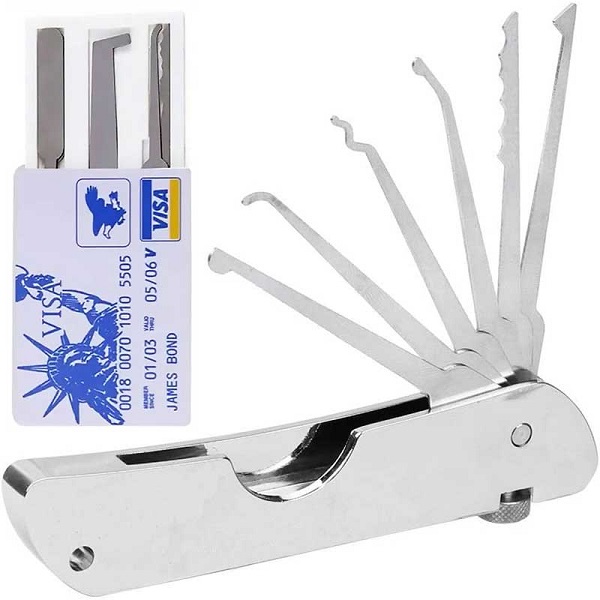
The core of this set is its robust folding handle, typically made from durable blue-anodized stainless steel. This handle features a secure locking mechanism that firmly holds each tool head in place when extended for use, preventing any wobble or rotation that could hinder delicate manipulation. When folded, the mechanism safely encases all sharp picks, making the set pocket-friendly and preventing accidental pricks or damage to the tools. Understanding how to smoothly unlock, extend, and re-lock each tool is the first step to effective use.
2.The Selection of Seven Interchangeable Tool Heads
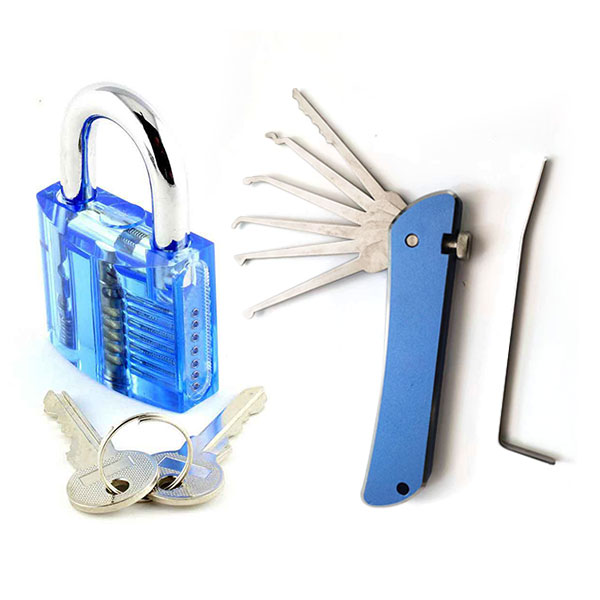
This set’s versatility comes from its seven integrated tool heads. The selection usually includes various hooks (like standard and deep reach), rakes (such as a snake rake and a city rake), and at least one or two torsion wrenches (tension tools). Each pick head serves a distinct purpose. Hooks are for single-pin picking, allowing you to meticulously lift each pin to the shear line. Rakes are for faster, scrubbing techniques to quickly set multiple pins through vibration and manipulation. The torsion wrench applies the crucial rotational tension to the plug, creating the binding necessary for picking.
3.The Advantages of Stainless Steel Construction
The blue stainless steel construction is not just for aesthetics. It provides significant practical benefits. Stainless steel offers excellent strength and corrosion resistance, ensuring the thin, delicate pick tips won’t bend or snap under normal pressure and won’t rust from moisture or fingerprints. The smooth, hard surface also allows the tools to glide more easily within the keyway, providing better tactile feedback, which is essential for sensing subtle pin movements.
How Do You Properly Hold and Manipulate Each Tool When Picking a Lock?
1.Mastering the Tension Wrench Grip
Proper technique begins with the torsion wrench, or tension tool. This is the foundation of your leverage. Insert the appropriate tip into the top or bottom of the keyway. Grip the handle of your folding set gently but firmly, using your thumb and index finger to apply very light clockwise or counter-clockwise pressure. The goal is to apply just enough torque to create binding pins without over-tensioning and locking the plug further. This requires a delicate, controlled touch often described as “feather light.”
2.Executing the Single Pin Picking Motion with a Hook
When using a hook pick for precision work, insert it above the tension wrench. Grip the folding handle like a pen, using your thumb and middle finger for stability and your index finger for fine guidance. Gently probe to find the first binding pin. Once located, use a small, upward lifting motion with your wrist or finger to nudge the pin upward until you feel or hear a slight click as it sets at the shear line. Maintain steady tension throughout this process. Repeat this systematic search-and-lift for each subsequent pin.
3.Applying the Raking Technique for Speed
For raking, use a snake or city rake head. Insert the rake fully into the keyway until it touches the back of the lock. Apply light to medium tension with your wrench. Then, using a brisk, short up-and-down or rocking motion, “scrub” the rake in and out. The idea is to bounce multiple pins to the shear line simultaneously through rapid manipulation. This technique is less precise than single-pin picking but can open simpler locks very quickly. Listen and feel for the plug to give way and rotate.
.jpg "Focus on Tension Control Above All Else")
What Tips Help You Use the Set More Effectively?
1.Prioritize Practice on Progressive Training Locks
Effectiveness comes from muscle memory and tactile sensitivity. Start with a clear acrylic training lock to visually confirm how your tools move the pins. Then, progress to a cutaway metal lock, and finally to standard practice locks of increasing difficulty. Dedicate time to using each tool head in your 7-in-1 set on these locks to understand their individual strengths and the specific feedback they provide through the handle.
2.Focus on Tension Control Above All Else
Ninety percent of picking difficulty lies in proper tension control. A common mistake is using far too much force. Practice applying the minimum tension required to turn the plug once the pins are set. Try alternating between light and slightly heavier tension if you get stuck. Often, a pin that won’t set with heavy tension will click into place immediately when you ease off. This skill is the true differentiator between a novice and a proficient picker.
3.Maintain Your Tools for Optimal Performance
After each practice session, wipe down your stainless steel tools with a soft cloth to remove any metal dust or oils from the lock. Periodically check the folding joint and locking mechanism for any lint or debris that could affect its smooth operation. A clean, well-maintained tool provides the most reliable feedback. Store the folded set in a dry place.
Mastering this compact toolset requires patience and dedicated practice. A reliable, well-made set is a long-term investment in developing a skilled hobby. While you may be tempted to search for Cheap Pocket Lock Pick Sets, investing in a quality, durable tool like a stainless steel folding set ensures better performance, longevity, and, most importantly, a more effective learning experience that builds proper technique from the start. Remember to always practice ethically and on locks you own.