





 Like Us on Facebook to enjoy 5% discount
Tension Wrenches Guide: Choosing the Right Type, Size, and Style
2026-09-22 10:56
Tension wrench is one of the fundamental tools used in lock picking practice. While picks manipulate components inside the lock, the tension wrench applies controlled rotational pressure to the plug, making tension control an important part of learning how a pin tumbler mechanism behaves. For locksport enthusiasts, locksmith trainees, and users practicing only on locks they own or have permission to work on, choosing the correct wrench can make practice more comfortable and consistent. Before you Buy Tension Wrench tools, it helps to understand the differences between top of keyway, bottom of keyway, Z-style, L-shaped, and other specialized designs.
What Is Tension Wrench?
Tension wrench, also called a tension tool, tension bar, tensioner, turning tool, or torsion wrench, is designed to apply torque to a lock plug. In a pin tumbler lock, controlled tension helps maintain the relationship between the plug, housing, pins, and shear line while the user practices manipulating the mechanism.The basic concept sounds simple, but wrench selection matters. Different keyways provide different amounts of space, and a wrench that is too loose may provide less precise feedback. A wrench that occupies too much of the available keyway can also reduce the working space available for a pick.This is why tension wrench sets commonly include multiple widths, thicknesses, shapes, and profiles rather than a single universal tool.
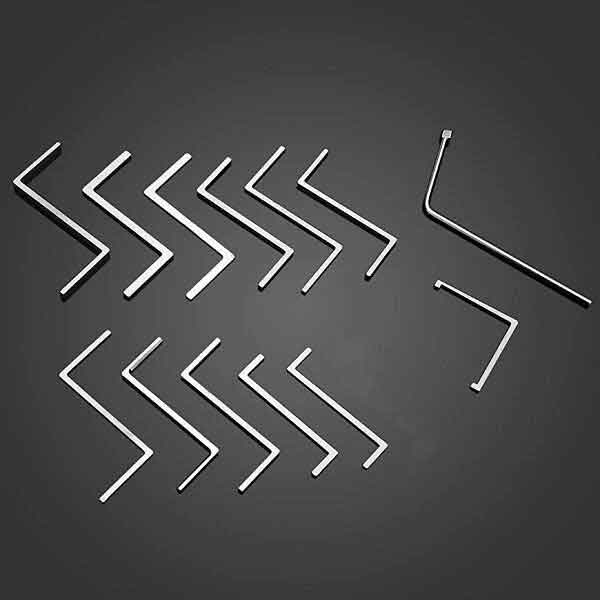
Tension Wrench Types Compared
LockPickMall currently lists several tension wrench configurations, including Top of Keyway sets, Zed wrenches, double-row tools, double-sided Y designs, adjustable tools, and a tool intended for tubular locks.
TOK wrenches are therefore useful additions to a toolkit when:
Bottom of Keyway
Some thicknesses appear more than once in the set because wrench geometry can vary even when thickness is similar. The same product lists a length of 3.58 inches, which is 0.59 inches longer than the site's conventional TOK wrenches. Its 0.079-inch "Big Boy" wrench is specifically described as an option for exceptionally wide keyways.
When comparing sizes, consider:
Technique also matters. LockPickMall notes that excessive tension can cause components to bind, while insufficient tension can prevent the mechanism from maintaining the required position. Learning controlled, light tension and responding to feedback is therefore more important than simply applying greater force.
| Tension Wrench Type | Position or Design | Main Characteristic | |
|---|---|---|---|
| TOK Wrench | Top of keyway | Leaves more of the lower keyway open | |
| BOK Wrench | Bottom of keyway | Traditional placement with simple leverage | |
| Z-Style Wrench | Z-shaped, often double-ended | Two working ends can provide different fitting options | |
| L-Shaped Wrench | Simple angled design | Straightforward shape and easy handling | |
| Double-Sided Y Wrench | Double-sided Y profile | Alternative geometry for different keyway shapes | |
| Tubular Tension Tool | Specialized design | Intended specifically for tubular lock applications |
The important point is that these styles are not interchangeable in every situation. The shape of the keyway and available working space should determine which tool is appropriate rather than choosing a wrench only by appearance.
TOK vs. BOK Tension Wrenches
Top of Keyway and Bottom of Keyway tensioning are two common configurations worth understanding.
Top of Keyway
A TOK wrench sits toward the top of the keyway. One of its major practical advantages is space. LockPickMall notes that bottom-positioned tools can occupy a significant portion of the keyway, while TOK placement frees additional room for the pick.
TOK wrenches are therefore useful additions to a toolkit when:
- Working space inside the keyway is limited.
- A BOK wrench occupies too much usable space.
- You want several thicknesses for different keyway dimensions.
- You are building a more versatile locksport practice set.
Bottom of Keyway
BOK tensioning places the wrench at the lower part of the keyway. It is a common configuration and is frequently included in beginner sets. LockPickMall specifically describes tension wrenches as tools that can apply pressure from the bottom of common pin tumbler locks.Neither placement should automatically be treated as the correct option for every lock. Keyway geometry and tool fit remain important considerations.
How to Choose the Right Tension Wrench Size?
Thickness is one of the most important specifications to examine. A wrench should fit the intended keyway securely enough to provide useful control without relying on an obviously unsuitable fit.LockPickMall's Extended Top of Keyway set provides a useful real-world example of how much sizing can vary. The eight-piece set lists wrench thicknesses of:
- 0.024 inches
- 0.028 inches
- 0.031 inches
- 0.039 inches
- 0.047 inches
- 0.079 inches
Some thicknesses appear more than once in the set because wrench geometry can vary even when thickness is similar. The same product lists a length of 3.58 inches, which is 0.59 inches longer than the site's conventional TOK wrenches. Its 0.079-inch "Big Boy" wrench is specifically described as an option for exceptionally wide keyways.
This illustrates why a multi-size set is often more flexible than relying on one wrench.
When comparing sizes, consider:
- Keyway width: Different locks have different available spaces.
- Fit: Excessive movement can reduce precise control and feedback.
- Working room: A wrench should not unnecessarily interfere with the pick.
- Thickness selection: Keeping several thicknesses allows the tool to be matched more closely to different practice locks.
- Length: Longer tools can change hand position and leverage, so comfort should also be considered.
Choosing Between L-Shaped, Z-Style, and Other Designs
Shape influences how a tension wrench sits in the hand and keyway.
L-shaped tension wrenches are among the simplest designs and are commonly associated with basic tensioning. Their uncomplicated geometry makes them useful tools for understanding the role of rotational pressure.
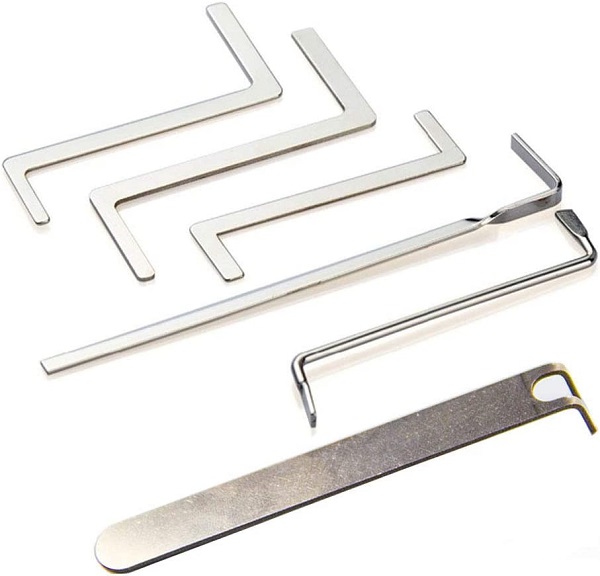
Z-style tension wrenches offer another approach. LockPickMall sells a multi-piece push-rod set containing Z-style and L-style tension tools, illustrating how mixed sets can provide several profiles instead of forcing one design to cover every situation.More specialized options should be selected for their intended application. For example, LockPickMall separately categorizes a tension tool for tubular locks rather than presenting it as a standard pin tumbler wrench.
Common Tension Wrench Selection Mistakes
Even with several tools available, beginners can make selection mistakes. Common issues include:
- Choosing one wrench and expecting it to fit every keyway.
- Ignoring thickness and focusing only on wrench shape.
- Using a loose-fitting tool when another size provides better control.
- Filling too much of the keyway and leaving insufficient working space.
- Assuming TOK is always better than BOK, or vice versa.
- Buying specialized tension tools without checking their intended lock type.
Technique also matters. LockPickMall notes that excessive tension can cause components to bind, while insufficient tension can prevent the mechanism from maintaining the required position. Learning controlled, light tension and responding to feedback is therefore more important than simply applying greater force.
Which Tension Wrench Should You Choose?
There is no single tension wrench that is ideal for every practice lock. A useful collection should provide enough variation to match different keyway dimensions and layouts. Beginners can start with several L-shaped or Z-style tools and both TOK and BOK options, while more experienced locksport users may benefit from expanding into multiple TOK thicknesses and specialized profiles.Ultimately, the right tension wrench comes down to three factors: type, size, and style. Match the design to the keyway, choose a thickness that provides a secure and controllable fit, and select a shape that leaves sufficient working room for your practice. Rather than searching for one universal solution, building a small selection of complementary tools gives you more flexibility across different locks. If budget is also a consideration when looking for a Cheap Tension Wrench, compare the included sizes, profiles, materials, and intended applications instead of judging a set only by the number of pieces it contains. Always use lock-picking tools responsibly and only on locks you own or have explicit permission to practice on.